A history of Christmas crackers
Christmas crackers are a quintessentially British Christmas tradition, combining a little bang, a paper crown, a joke and a small gift. They originated in London in the 1840s, thanks to a confectioner named Tom Smith.
 The beginnings: Tom Smith
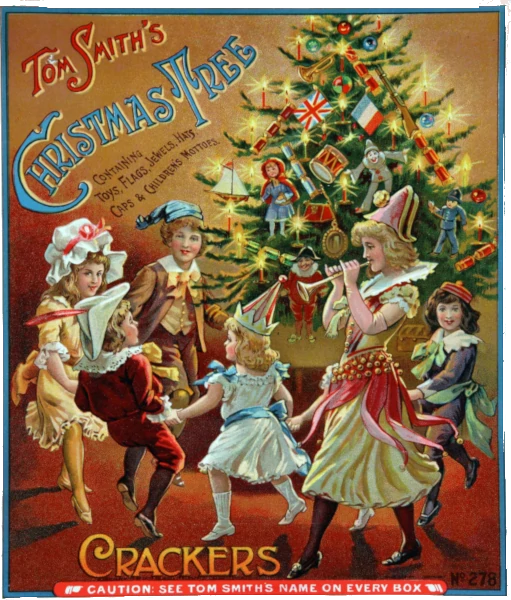
Tom Smith was a London-based sweet maker who began selling French-style sugared almonds in the 1840s. According to the traditional story, while visiting Paris he encountered the idea of wrapping sweets in attractive paper.
Back in London, Smith developed his own wrapped sweets. He eventually added romantic messages inside the packages, making them popular as gifts.
The crucial breakthrough came when Smith was inspired by the crackling sound of a log fire. He experimented with a small explosive mechanism that would make the package snap when pulled apart. By the late 1840s or early 1850s, his invention had evolved into what became known as the Christmas cracker.
 From sweet wrapper to Christmas tradition
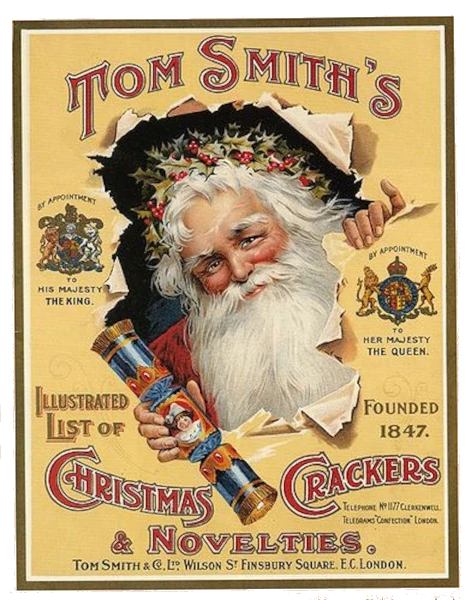
Early crackers were considerably simpler than today's versions. They were essentially decorated paper packages containing sweets, small gifts and messages, with the explosive "snap" added as Smith refined the design.
The name "cracker" came from the distinctive cracking sound produced when the two halves were pulled apart.
Smith's company, Tom Smith's, became extremely successful. The crackers became increasingly elaborate, particularly as Victorian Christmas celebrations grew in popularity.
The Victorian era
During the second half of the 19th century, Christmas crackers became strongly associated with the Victorian Christmas.
Manufacturers began decorating crackers with colourful paper, ribbons, metallic foil and increasingly elaborate designs. The contents also diversified. Instead of simply containing sweets, crackers might include:
-
small toys and novelties
-
jewellery or trinkets
-
puzzles
-
paper hats
-
jokes and riddles
The paper crown, now perhaps the most recognisable part of a Christmas cracker, appeared later in the tradition rather than being part of the original invention.
Why the jokes?
The jokes and riddles helped turn crackers from simple gifts into part of the entertainment of Christmas dinner. Their deliberately terrible humour became a tradition in its own right.
The classic format developed into:
Pull → bang → open → wear the crown → read the joke → retrieve the gift.
The crackers also helped create a sense of ceremony around the Christmas dinner table, with everyone pulling one at roughly the same time.
Christmas crackers today
Although crackers are particularly associated with Britain, the tradition has spread to other English-speaking countries, including Ireland, Australia, New Zealand and parts of Canada.
Modern crackers vary enormously. Some contain luxury gifts, while inexpensive versions still contain the familiar combination of a paper crown, a terrible joke and a tiny plastic or metal novelty.
The basic design, however, has changed remarkably little in more than 170 years. What began as a Victorian confectioner's experiment became one of the enduring symbols of the British Christmas table.
In short: Christmas crackers evolved from Tom Smith's wrapped sweets in 1840s London, acquired their famous snap through experimentation with a friction-based chemical mechanism, and were transformed during the Victorian period into the festive table decoration and party novelty we recognise today.